BIGSTORY Network


International News March 10, 2026, 8:39 p.m.

The Diaspora Crossfire: Iran's Devastating Strikes on Bahrain Trap Three Lakh Indians

As Iranian missiles paralyze critical civilian infrastructure and oil refineries in Manama, the massive Indian expatriate community faces a survival crisis without a clear evacuation corridor.

by Author Sseema Giill
Hero Image

⏱️ 30-Second Brief

Expand to Read

What happened: Iran launched heavy drone and missile strikes against Bahrain, hitting the US Fifth Fleet base, a civilian water plant, and the country's largest oil refinery. Why it happened: Under new Supreme Leader Mojtaba Khamenei, Iran is retaliating against Gulf nations that host US military assets involved in 'Operation Epic Fury'. The strategic play: By targeting oil refineries and desalination plants, Iran is demonstrating its ability to cripple the economic and civilian lifeblood of US-allied Arab states. India's stake: Over 300,000 Indian nationals are trapped in the crossfire as civilian areas are hit, while the resulting oil supply shutdown threatens India's energy security. The deciding question: Will the Indian government launch an emergency evacuation for its citizens in Bahrain before the country's airports and bridges are fully incapacitated?

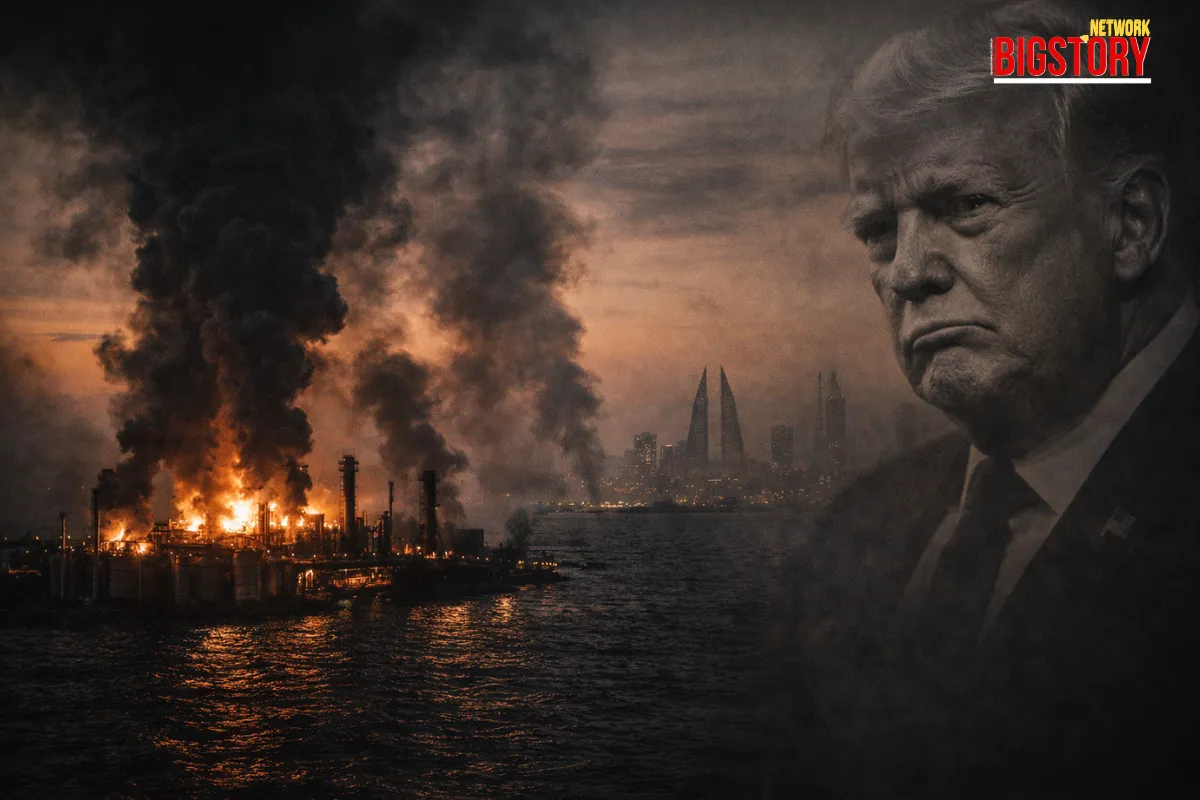
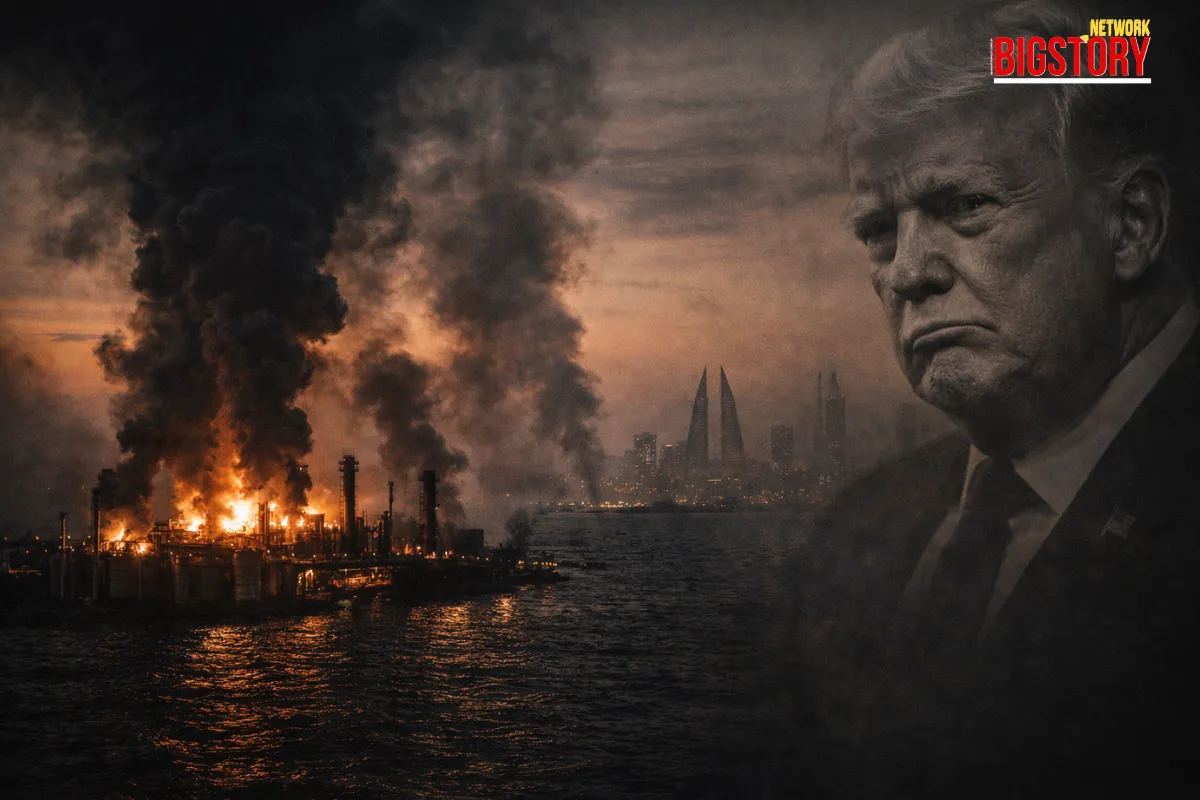
The geopolitical landscape fractured further on Monday as the deadly iran attacks bahrain oil refinery 2026 escalation trapped hundreds of thousands of expatriates in an active war zone. State-owned Bapco Energies formally declared force majeure after Iranian drones and missiles ignited massive fires at its primary Sitra refinery, compounding coordinated strikes that also targeted the US Navy's Fifth Fleet headquarters in Manama.

This aggressive bombardment shatters the illusion of safety in the Gulf. With Iranian projectiles now striking civilian water desalination plants and critical industrial zones, over 300,000 Indian nationals face life-threatening conditions. The Indian Embassy immediately issued an urgent vigilance alert, but the sheer scale of the infrastructure destruction demands a full-scale evacuation strategy before the tiny island nation's borders completely shut down.

How We Got Here

  • The Trigger: The United States and Israel initiated 'Operation Epic Fury', prompting Iran to launch retaliatory missiles at the US Fifth Fleet base in Juffair, Bahrain on February 28.
  • The Background: Tensions skyrocketed as Bahrain formally accused Iran of indiscriminately attacking civilian infrastructure, specifically hitting a crucial water desalination plant on March 8.
  • The Escalation: Iranian drones struck the Bapco oil refinery in Sitra on March 9, critically injuring several civilians, including children, and forcing Bahrain to halt vital oil shipments.
  • The Stakes: The Indian Embassy in Bahrain issued an urgent advisory to its citizens to remain vigilant and follow safety protocols as the aerial bombardment expands into civilian and industrial sectors.

The Key Players

Mojtaba Khamenei, Supreme Leader, Iran Under his newly established leadership following his father's assassination, Tehran drastically intensified its aggressive regional strikes against Gulf nations hosting American military assets. He is actively demonstrating a willingness to destroy civilian economic infrastructure to enforce his strategic will.

Masoud Pezeshkian, President of Iran Pezeshkian defended the strikes on Bahrain and the UAE as a "defensive necessity" against US forces. He explicitly warned that increased pressure from Washington and its allies will naturally trigger stronger, more destructive Iranian responses.

Indian Embassy in Bahrain Tasked with the safety of over 300,000 Indian nationals, the diplomatic mission currently relies on vigilance alerts. They face immense, mounting domestic pressure to secure viable, physical evacuation corridors as the civilian infrastructure surrounding the diaspora burns.

The BIGSTORY Reframe — The Civilian Crossfire

Mainstream Western coverage focuses obsessively on the military confrontation between Tehran and the US Navy's Fifth Fleet, treating the transition of power to Mojtaba Khamenei as a purely strategic chess game. This narrow perspective entirely misses the catastrophic reality unfolding for the Global South. Iranian strikes are no longer confined to military installations; they are indiscriminately destroying fundamental civilian lifelines, including water desalination plants and the Sitra industrial zone.

For the 300,000 Indian nationals living and working in Bahrain, this transition from military to civilian targeting turns the tiny island into a lethal trap. Expatriates face falling debris, crippling water shortages, and direct hits on industrial workplaces where thousands are employed. The Indian diaspora are sitting ducks in a proxy war. Simultaneously, Bapco's force majeure instantly chokes off downstream petroleum supplies, driving Brent crude past $114 and directly exacerbating India's domestic fuel rationing and inflation crisis.

What This Means for India

  • Evacuation Imperative: The Ministry of External Affairs must instantly elevate its basic "vigilance advisory" into a full-scale contingency evacuation plan, establishing emergency transit routes via the King Fahd Causeway into Saudi Arabia.
  • Energy Shock: The destruction of the Bapco refinery tightens the global oil chokehold, accelerating domestic inflation and placing immense pressure on India's already strained strategic petroleum reserves.
  • The Next 48 Hours: The Indian government must coordinate closely with Saudi authorities to secure land borders for fleeing civilians before Manama's international airport sustains critical damage from incoming projectiles.

The Implications

  • Short Term: Air raid sirens and infrastructure failures will trigger panic among expatriate communities, forcing the Indian embassy to manage mass emergency shelter operations within Manama.
  • Medium Term: The total loss of Bahrain's refining capacity will cement Brent crude prices at wartime highs, mathematically forcing the Indian government to pass severe fuel price hikes onto domestic consumers.
  • India-Specific Consequence: The extreme vulnerability of three lakh citizens in a country smaller than Delhi proves that India's massive remittance-driven diaspora requires permanent, rapid-deployment military evacuation protocols, not just diplomatic advisories.

If an allied nation's water plants and oil refineries are burning under foreign drone strikes, why is the Indian government merely asking three lakh trapped citizens to "remain vigilant" instead of bringing them home?

Sources

News & Wire Coverage:

Official Statements & Data:

  • Diplomatic Record: Indian Embassy in Bahrain issues urgent advisory to citizens — March 9, 2026


Sseema Giill
Sseema Giill Founder & CEO

Sseema Giill is an inspiring media professional, CEO of Screenage Media Pvt Ltd, and founder of the NGO AGE (Association for Gender Equality). She is also the Founder CEO and Chief Editor at BIGSTORY NETWORK. Giill champions women's empowerment and gender equality, particularly in rural India, and was honored with the Champions of Change Award in 2023.

BIGSTORY Trending News! Trending Now! in last 24hrs

The Illusion of an Endgame: IRGC Rejects Trump's Timeline and Threatens India's Energy Lifeline
International News
The Illusion of an Endgame: IRGC Rejects Trump's Timeline and Threatens India's Energy Lifeline
The Extraterritorial Blacklist: How the Anthropic-Pentagon Lawsuit Traps India's IT Giants
International News
The Extraterritorial Blacklist: How the Anthropic-Pentagon Lawsuit Traps India's IT Giants
The Diaspora Crossfire: Iran's Devastating Strikes on Bahrain Trap Three Lakh Indians
International News
The Diaspora Crossfire: Iran's Devastating Strikes on Bahrain Trap Three Lakh Indians
The Human Shield Crisis: Iran's Drone Strike on a US Tanker Traps Indian Seafarers in the Gulf
International News
The Human Shield Crisis: Iran's Drone Strike on a US Tanker Traps Indian Seafarers in the Gulf